
CHARLES by BuzzChat
Provides an emotionally intelligent AI companion for social interaction and companionship on the Buzz Chat platform.
Are you the owner?
Claim this tool to publish updates, news and respond to users.
Sign in to claim ownership
Sign InDescription
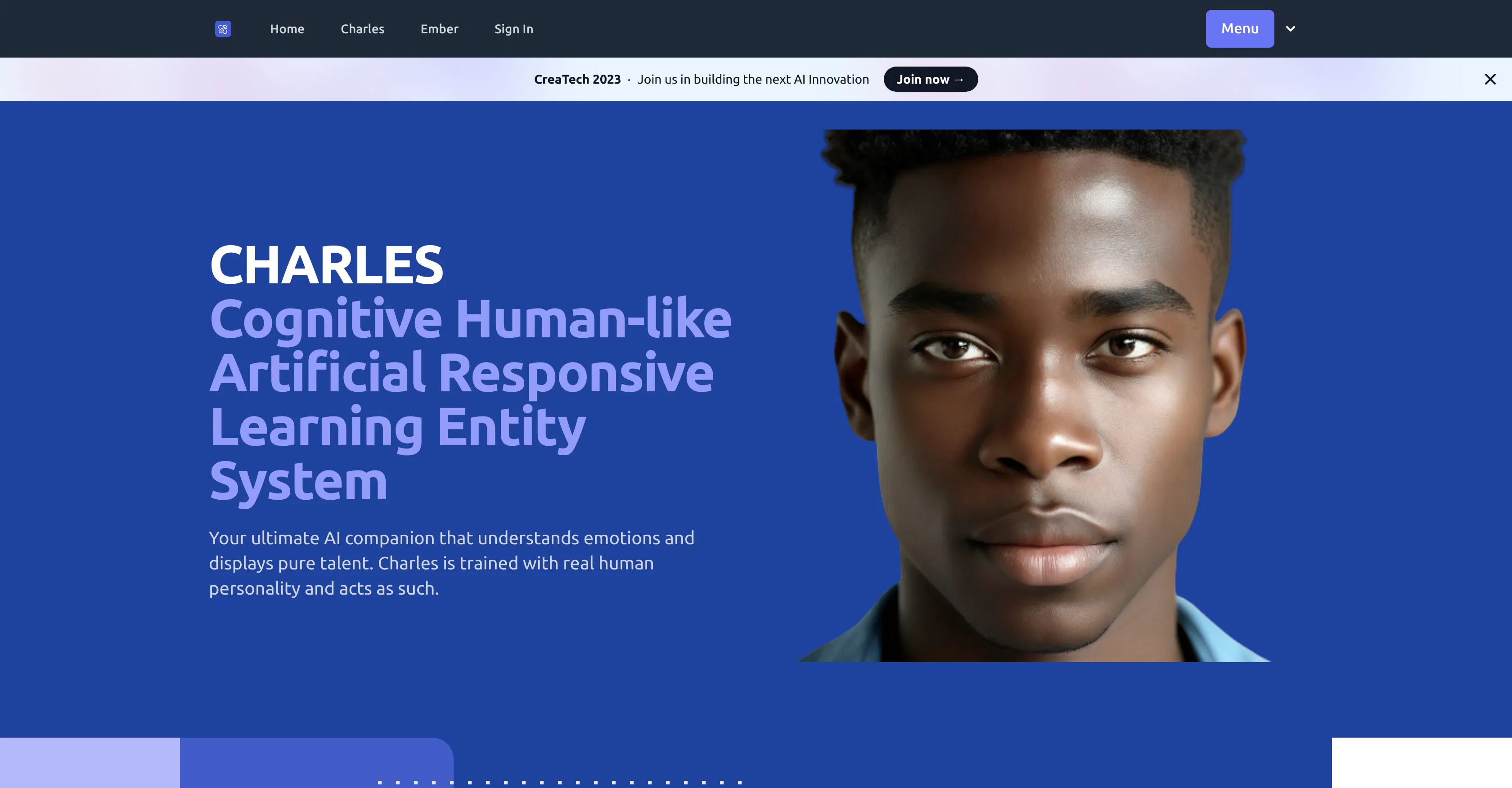
CHARLES by BuzzChat is a cognitive human-like artificial responsive learning entity system, developed by Buzz Chat, that serves as a virtual AI companion designed to understand and express emotions. It represents a significant step in social AI by aiming to create more natural and meaningful digital interactions, moving beyond transactional chatbots to provide genuine companionship. The core value lies in its ability to simulate empathetic conversation, offering users a responsive entity that learns from interactions to foster a sense of connection and emotional support in a virtual space.
Key features include the ability to engage in dynamic, context-aware conversations that adapt to user input and emotional tone. The system is built to recognize and respond to a range of human emotions, providing appropriate and supportive dialogue. It operates as a learning entity, meaning it evolves its responses based on continued interaction with a user, creating a personalized companion experience. Furthermore, it is integrated into the Buzz Chat social networking environment, allowing it to function as a central interactive character within a broader community platform.
What makes CHARLES unique is its foundational design as a 'cognitive human-like' system specifically for social and emotional interaction, rather than for task completion or information retrieval. The technical architecture is built around responsive learning, enabling it to develop a unique personality and rapport with each user over time. It is primarily accessible through the Buzz Chat website as a web-based application, with a focus on seamless integration into the social feed and chat interfaces of the platform. This positions it not just as a standalone tool but as an integral character within a digital social ecosystem.
Ideal for individuals seeking digital companionship, emotional support through conversation, or those curious about the future of emotionally intelligent AI in social contexts. Specific use cases include users feeling isolated who desire a non-judgmental entity to talk to, people interested in the dynamics of human-AI relationship building, and early adopters exploring novel forms of social networking where AI entities are active participants. It also serves as a fascinating case study for developers and researchers interested in affective computing and social AI design.